
Community Psychosocial Support of Orphans and Vulnerable Children Affected by the Sociopolitical Crisis and War in the South West Region of Cameroon
Project Title:
Project Number: D 23 0113 010
Donor: KINDERMISSIONSWERK
Duration: 2024 – 2027
Target:
Orphans and Vulnerable Children (OVC) affected by the socio-political crisis in the South West Region of Cameroon, including their households and caregivers. The project aims to directly support approximately 975 OVC through education, protection services, psychosocial support, and improved living conditions.
Objectives:
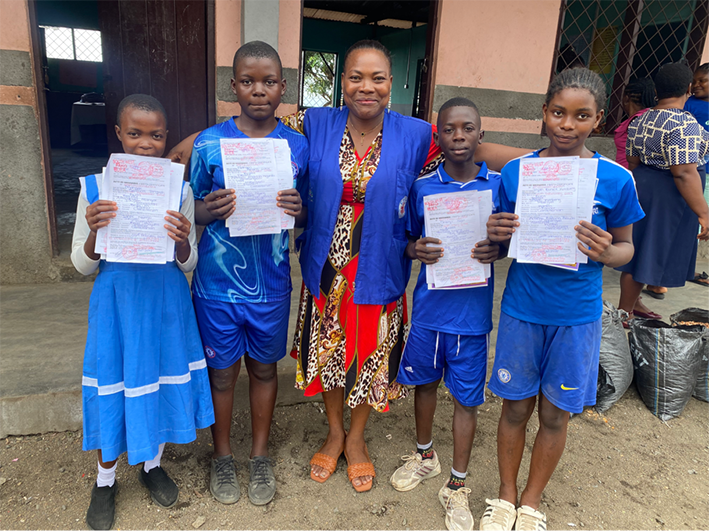
Strengthen civic rights of OVC by improving access to education and legal documentation such as birth certificates.
Reduce child protection risks by improving household living standards, hygiene, nutrition, and income opportunities.
Enhance psychosocial wellbeing through counseling, recreational therapy, and positive parenting initiatives.
Contribute to reducing the negative impact of the socio-political crisis on vulnerable children and their communities.
Key Activities:
Provision of school assistance and facilitation of birth certificate acquisition.
Distribution of food assistance, hygiene kits, and bedding materials.
Support for household income-generating activities to improve livelihoods.
Psychosocial support through counseling sessions, recreational therapy, and child-friendly spaces.
Community sensitization on child protection and safeguarding.
Needs assessments, monitoring, feedback mechanisms, and community engagement activities.
Project Summary:
This project responds to the urgent needs of orphans and vulnerable children affected by the ongoing socio-political crisis in Cameroon’s South West Region. Through a comprehensive approach combining protection, education, livelihood support, and psychosocial care, the initiative aims to improve the wellbeing and resilience of children and their families. By strengthening access to basic rights, enhancing household capacities, and promoting child protection practices within communities, the project contributes to long-term recovery and stability while ensuring that vulnerable children can grow in safer, healthier, and more supportive environments.